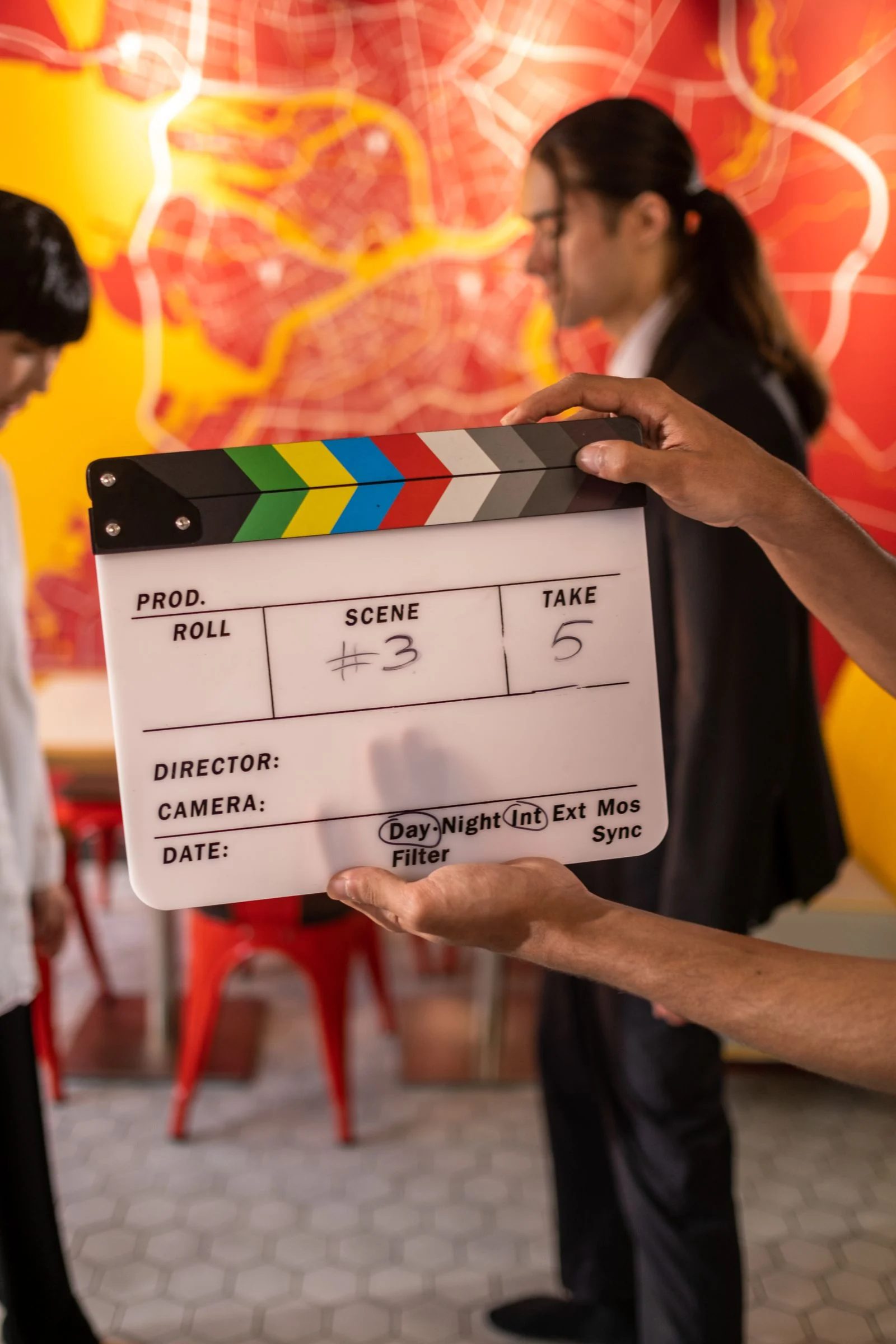

Look for a way of being
Before collecting faces, describe the person the film needs. How do they enter a room? What are they comfortable doing? What catches their attention? Those questions make a casting brief more useful than a string of visual adjectives. A performer who understands a particular gesture or situation can bring detail that would take much longer to manufacture on set.
Give the audition an action
Ask somebody to do something ordinary: prepare a drink, wait for a friend, choose an object. A small action reveals rhythm, attention and physical ease. Keep the direction clear and the environment welcoming. The goal is not to catch someone out. It is to discover whether their natural presence and their response to direction belong in the same film.
Make room for different experience
Professional performers and people appearing on camera for the first time need different kinds of preparation. Explain the scene, the people present and the intended use of the footage before the shoot. Allow rehearsal time without demanding a perfect first take. Comfort does not remove direction; it creates the conditions in which direction can be heard and used.
Cast the relationship, too
When two people share a frame, their relationship becomes part of the image. Test how they listen, interrupt and occupy space together. Individually strong auditions do not always produce a convincing pair. Leave time to watch the moments between lines, and build a shortlist around the whole scene rather than treating every role as an isolated portrait.